

Research
How microorganisms move, survive and interact across environmental boundaries
Airborne microorganisms — bioaerosols — travel long distances and can significantly affect ecosystems, biogeochemical cycles and human health. We study the journeys they make between deserts, oceans, inland waters and cities, the adaptations that let them survive those journeys, and what their arrival means at the other end.
Micro-CT imaging of a dust-associated Bacillus sample
To survive an aerial journey, microorganisms rely on adaptations such as resistance to UV radiation and desiccation, or attachment to particulate matter. These survival mechanisms, and the bioactivity of microbes while airborne, remain largely underexplored.
Our group works across three connected research directions. Each asks a version of the same question from a different environment: which microorganisms become airborne, what happens to them in transit, and what do they do when they land?
What we study
Transport
How microorganisms become airborne and how far they travel — from dust plumes crossing oceans to sea spray leaving the water surface.
Survival
The adaptations — biofilms, particle association, stress resistance — that let cells endure UV radiation, desiccation and days aloft.
Impact
What arrival means: effects on biogeochemical cycles, microbial ecology, the spread of resistance, and exposure in the places people live.
Research directions
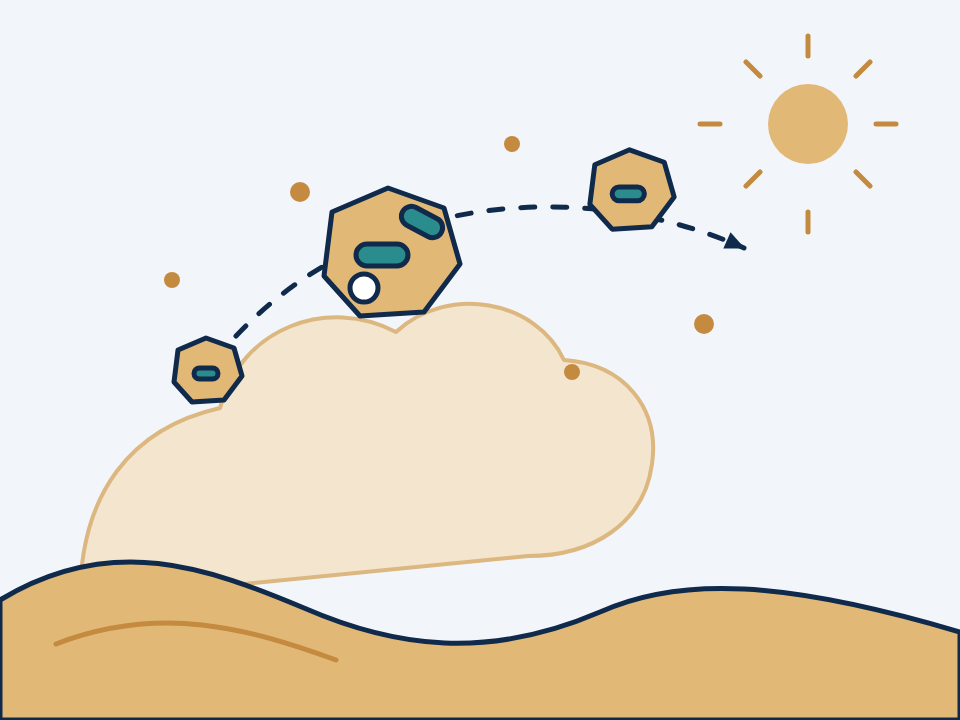
The Dustosphere
Dust events carry bacteria, fungi and viruses across continents. We study the microorganisms that survive the journey and what their survival strategies mean for the carbon cycle and for biotechnology.
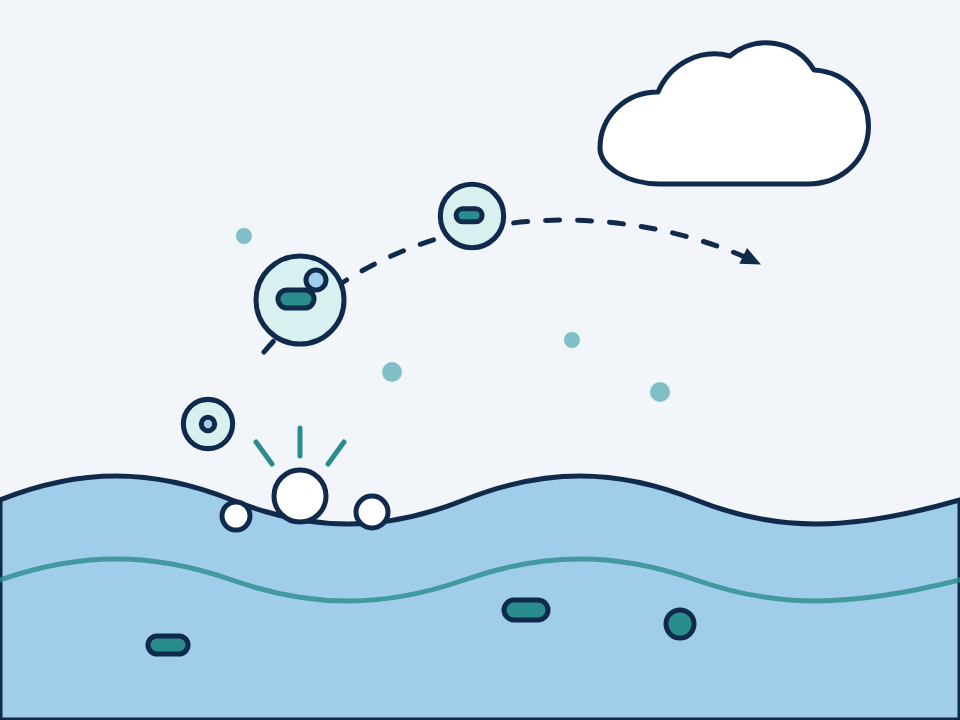
Marine Bioaerosols & Aerial Connectivity
Microorganisms cross continuously between water and air. We follow them out of the ocean and inland waters, through the atmosphere, and back down again — and ask what that exchange does to the ecosystems at both ends.
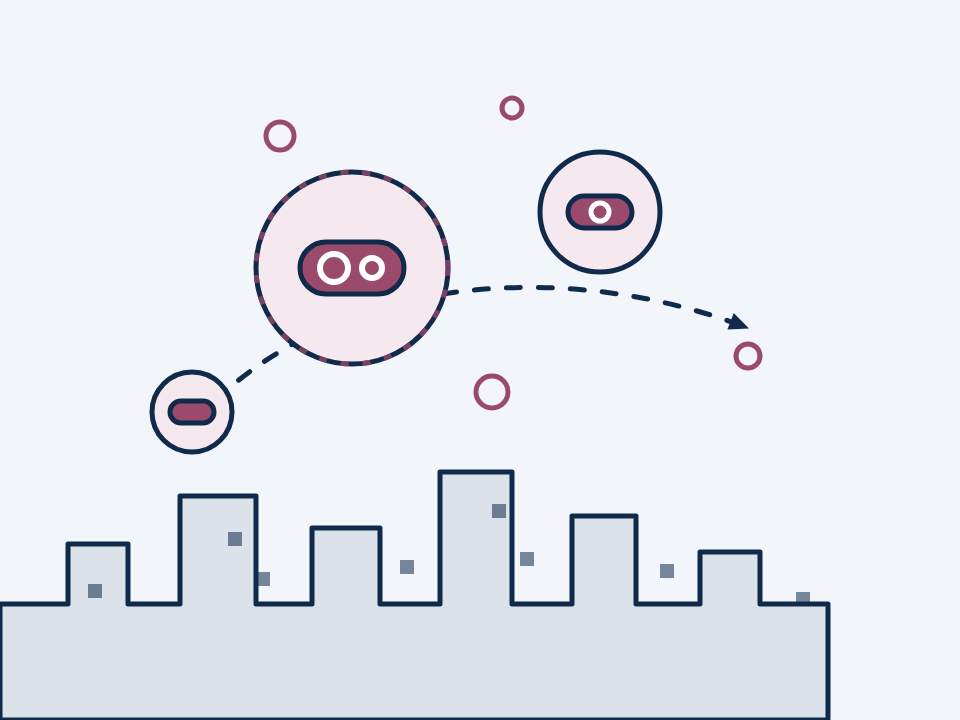
Atmospheric Transport of Antibiotic Resistance
Antibiotic resistance genes travel through urban air on particles. We measure how they are distributed across particle sizes, what they travel with, and what that means for exposure.