
Project 02
Marine Bioaerosols & Aerial Connectivity
Microorganisms cross continuously between water and air. We follow them out of the ocean and inland waters, through the atmosphere, and back down again — and ask what that exchange does to the ecosystems at both ends.
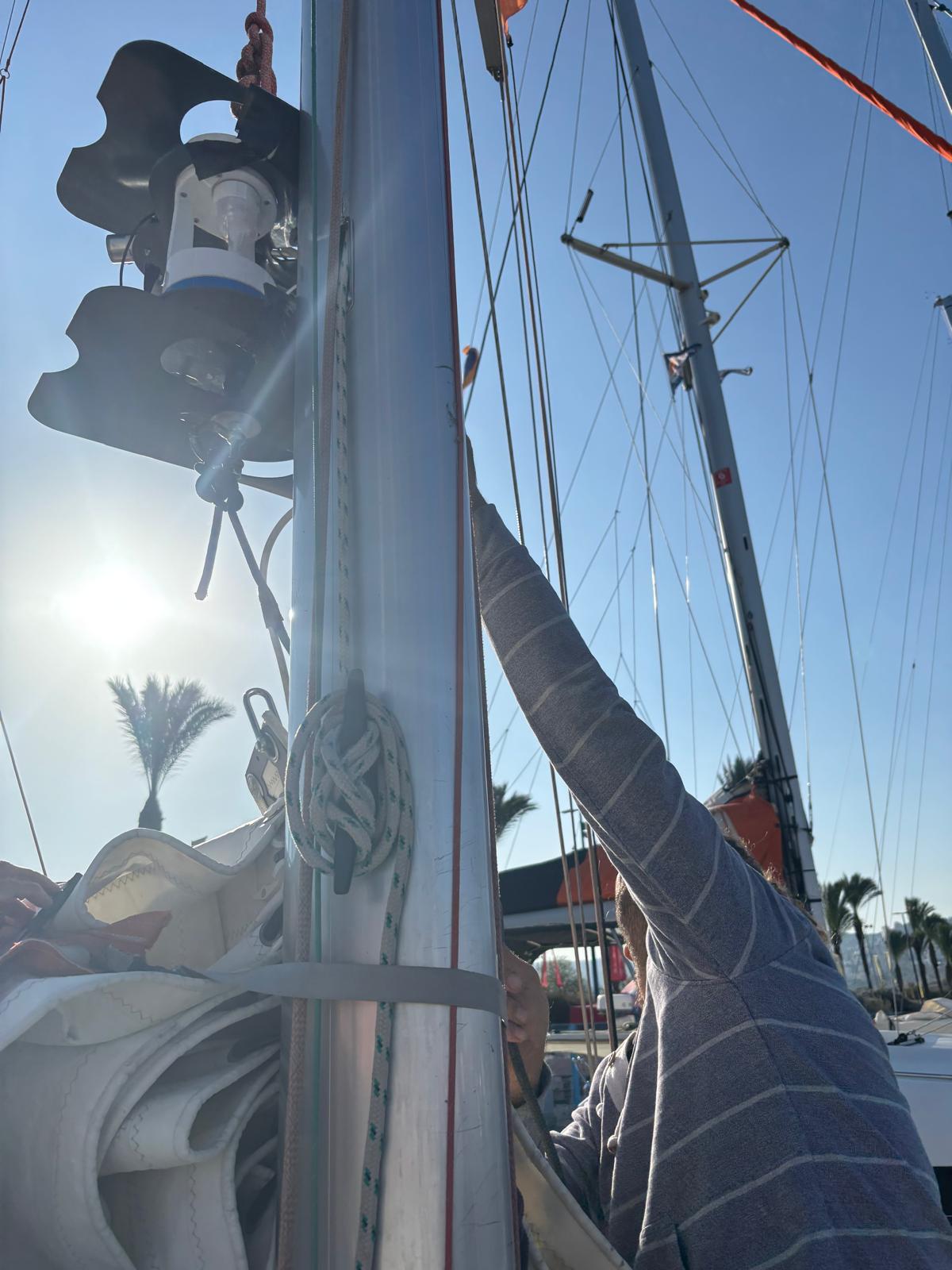
Air samplers lifting, Mediterranean Sea, Fall 2025
01Research overview
Marine bioaerosols are microorganisms emitted from, and travelling through, the atmosphere above marine environments. We study their complex transitions between the ocean and the air, looking at their origins, metabolic capabilities and health implications.
These airborne microorganisms are ecologically significant: they contribute to global biogeochemical cycles, influence climate patterns, and can affect health.
02Scientific background
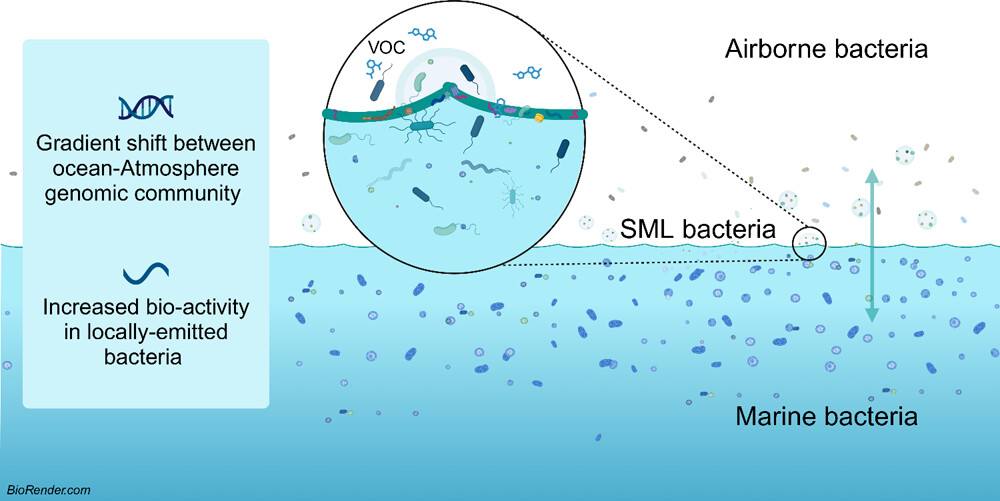
At the sea surface, bubbles bursting in breaking waves eject droplets into the air. The droplets form in the sea surface microlayer — the thin, chemically and biologically distinct skin of the ocean — so the microbial community that becomes airborne is not simply a sample of the water beneath it.
Once aloft, marine microorganisms mix with material transported from land, including desert dust. The composition of the air above the ocean therefore records both local emission and long-range transport.
03Research questions
- Which marine microorganisms are selectively transferred from the ocean to the atmosphere, and through what mechanism?
- How much of the microbial community above the ocean is marine in origin, and how much arrives from land?
- Do airborne microorganisms remain biologically active, and can they still affect the ecosystems they land in?
- How are separate water bodies connected to one another through the air, and how does that connectivity respond to climate change?
04Experimental approaches
Shipboard aerosol sampling
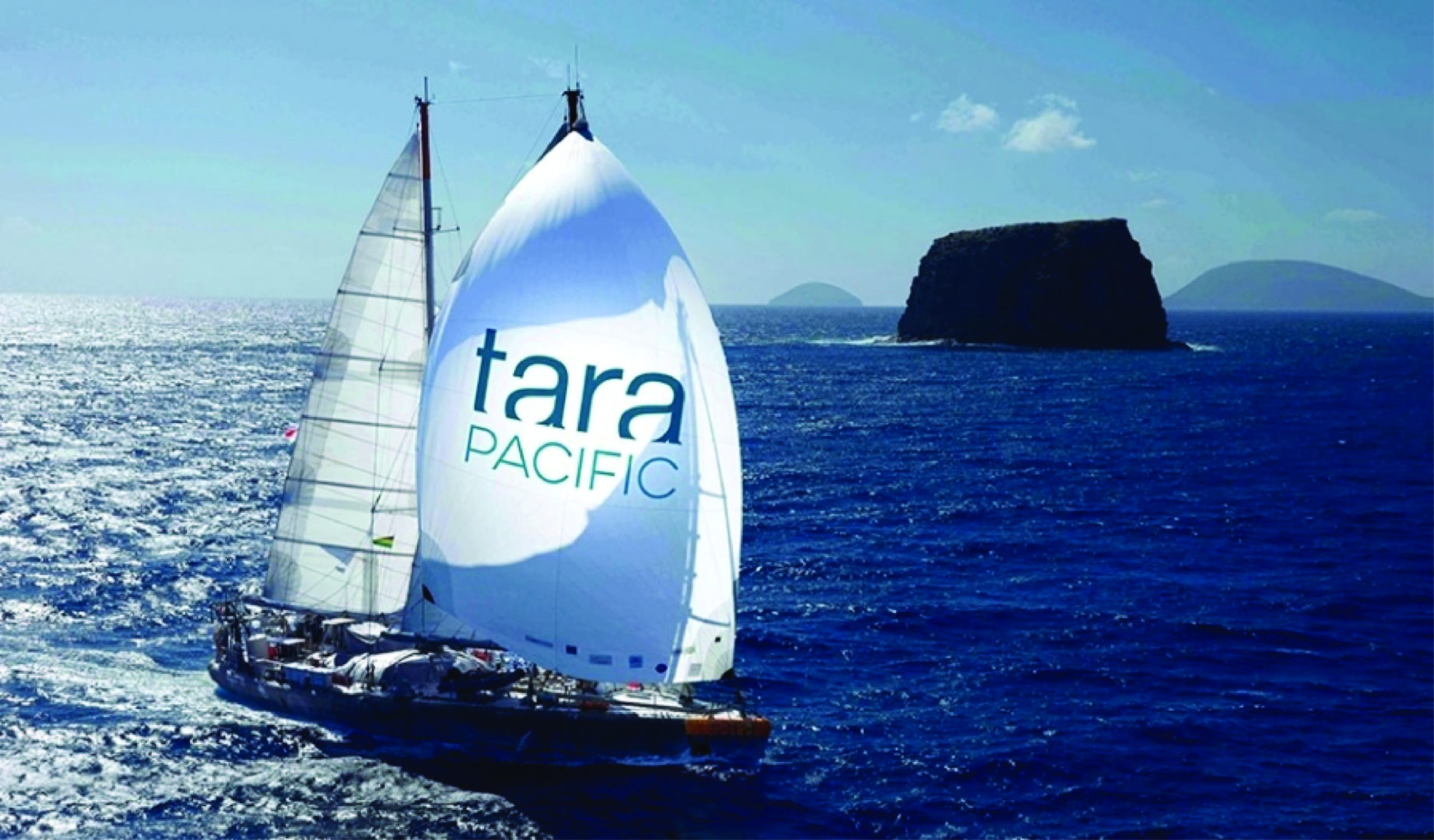
Air sampling aboard research vessels and sailing boats during ocean cruises, including the Tara Pacific Expedition and the Gradient 4 cruise in the Pacific.
Sea surface microlayer sampling
Paired sampling of the sea surface microlayer, underlying water and overlying air, to measure which taxa are selectively transferred.
Airborne platforms
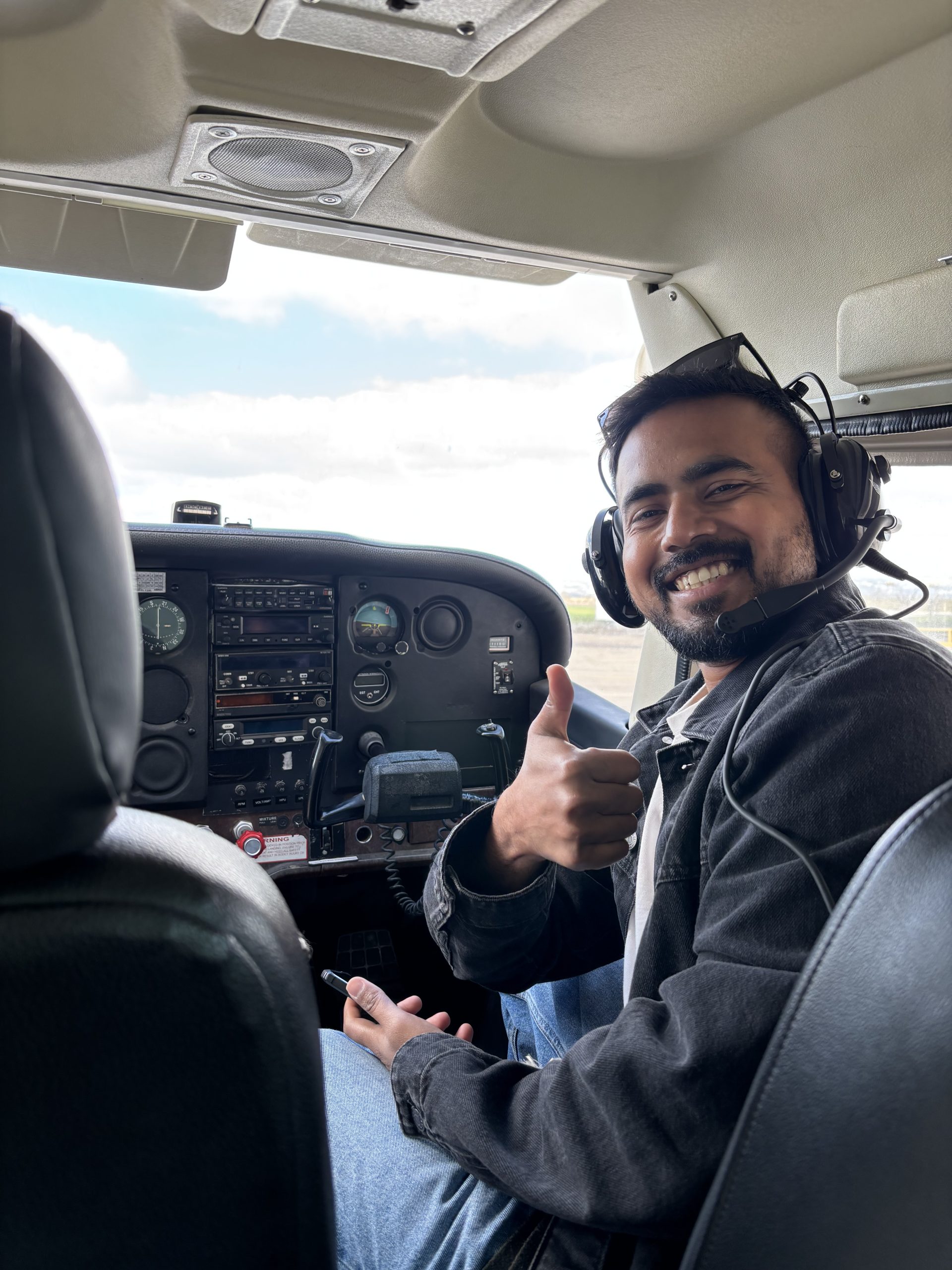
Air sampling from a light aircraft, extending measurement from the surface into the air column.
Shoreline sampling stations
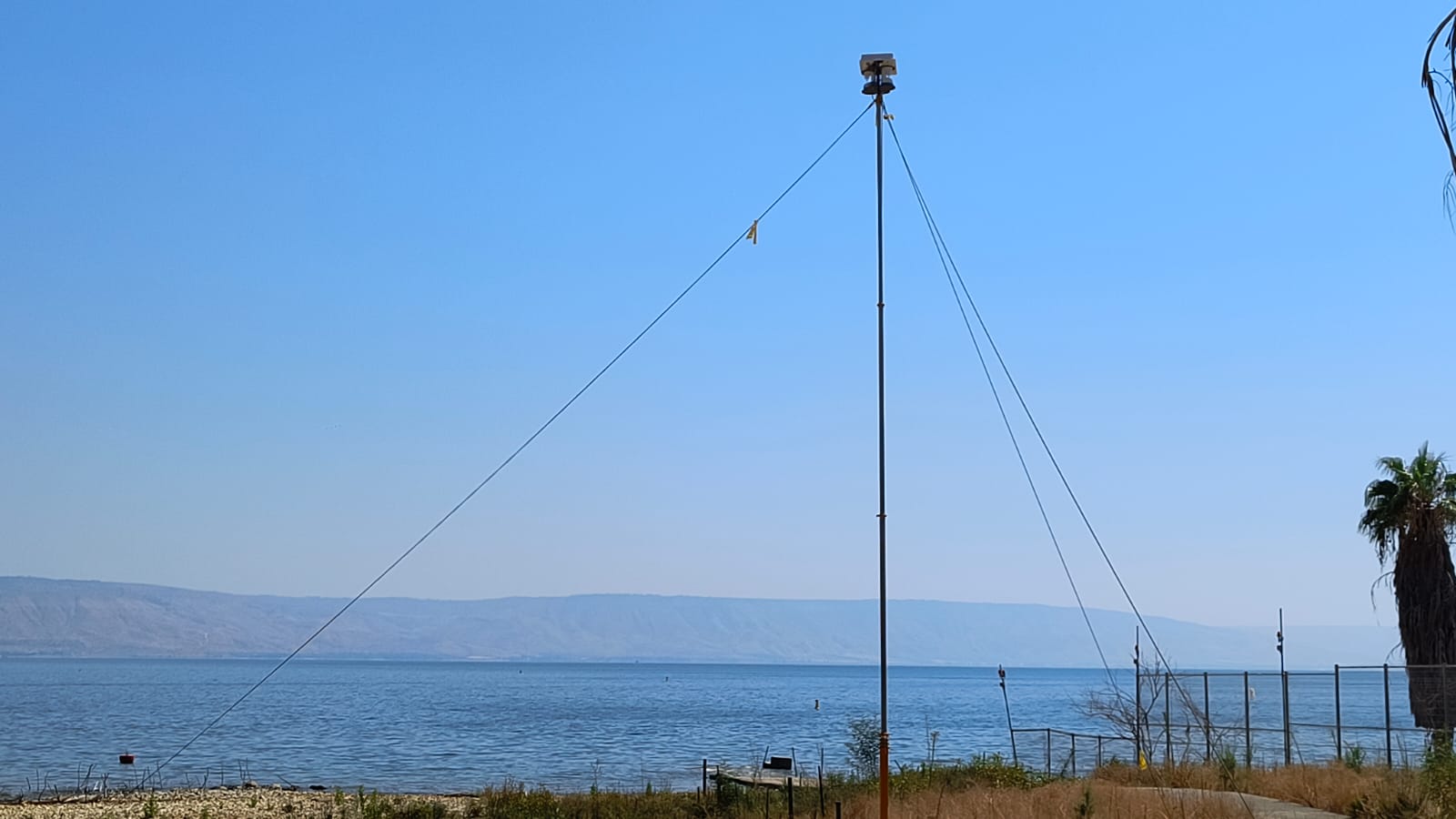
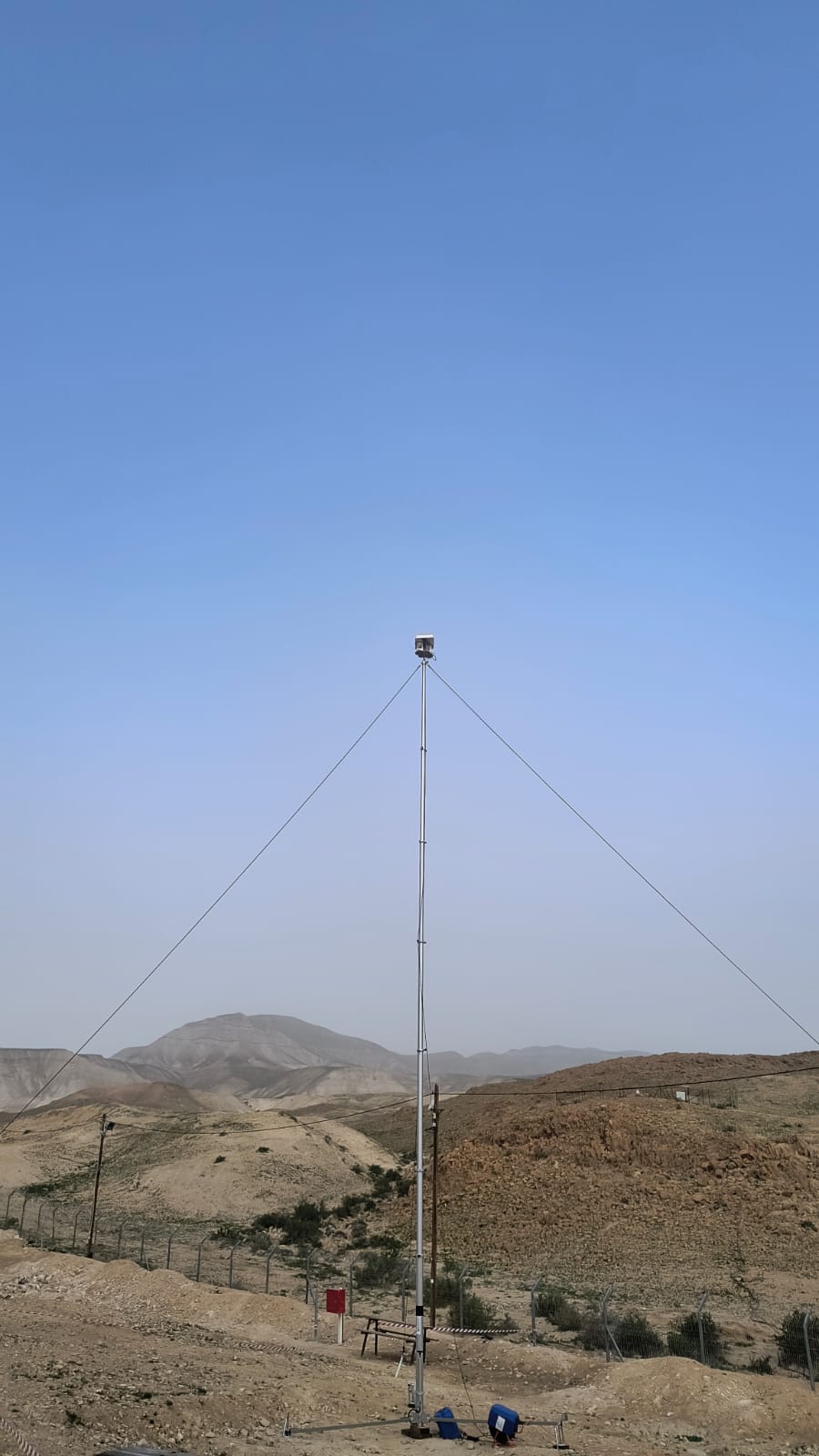
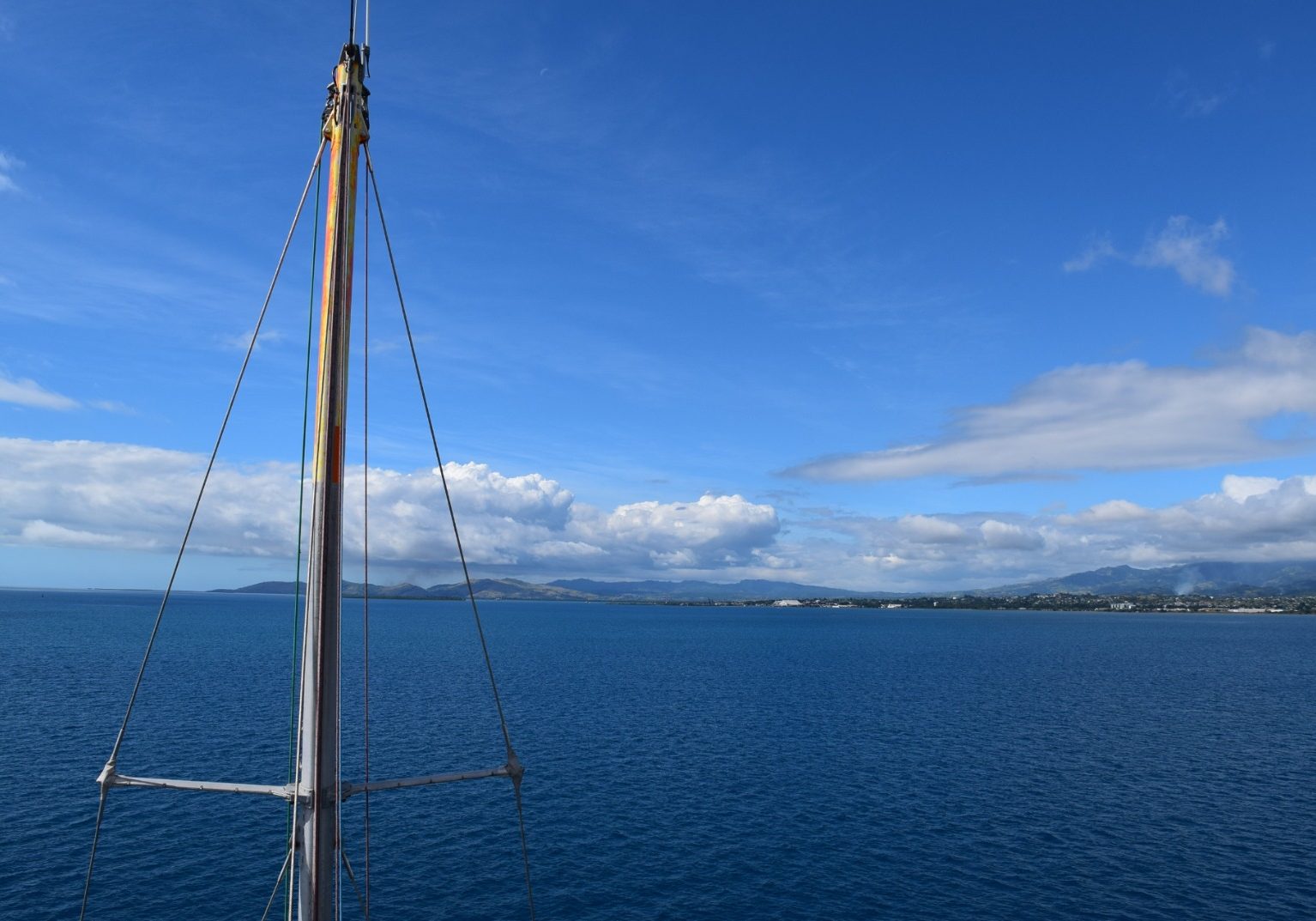
Fixed air-sampling masts at inland water bodies for the Aerial Connectivity project.
Community sequencing
Genetic characterisation of airborne and aquatic bacterial communities to compare composition across environments.
Infectivity assays
Laboratory testing of whether aerosolised bacteria retain their biological activity — for example, the ability to lyse algal cultures.
05Findings and significance
Microbial community composition was more variable in the atmosphere than in the surface ocean, and bacterial communities were more similar between the two surface oceans than between the ocean and the air above it. Atmospheric community composition over the Atlantic was dominated by terrestrial and specifically dust-associated bacteria, whereas over the Pacific there was a higher prevalence of marine bacteria.
Lang-Yona et al., Communications Earth & Environment, 2022 · read the paperWe isolated an airborne algicidal bacterium, Roseovarius nubinhibens, emitted as primary marine aerosol and collected above a coccolithophore bloom in the North Atlantic. The aerosolized bacteria retained infective properties and induced lysis of Gephyrocapsa huxleyi cultures — suggesting that atmospheric transport can spread infection agents over vast oceanic regions.
Lang-Yona et al., The ISME Journal, 2024 · read the paperOur 2025 study in ACS ES&T Air examined selective ocean–atmosphere bacterial flux through the Pacific sea surface microlayer.
Tastassa et al., ACS ES&T Air, 2025 · read the paperTaken together, these results show that the atmosphere is not a passive container for microorganisms but an active route of dispersal — one capable of carrying biologically functional cells between ocean regions, and between water bodies that share no surface connection at all.
06Within this project
Aerial Connectivity between Water Bodies
We explore the critical role of microorganisms in terrestrial water ecosystems, investigating how microbial populations adapt and interconnect across different environments through the air.
By examining microbial connectivity, aerial transport mechanisms and ecological dynamics, we aim to understand how these microscopic communities respond to environmental changes, particularly those driven by climate change.
This project is part of the Vatat Water Bodies Center, 2024.
07From the field and the lab

08Related publications

09Collaborations and funding
Other research directions

The Dustosphere
Dust events carry bacteria, fungi and viruses across continents. We study the microorganisms that survive the journey and what their survival strategies mean for the carbon cycle and for biotechnology.

Atmospheric Transport of Antibiotic Resistance
Antibiotic resistance genes travel through urban air on particles. We measure how they are distributed across particle sizes, what they travel with, and what that means for exposure.