

Project 01
The Dustosphere
Dust events carry bacteria, fungi and viruses across continents. We study the microorganisms that survive the journey and what their survival strategies mean for the carbon cycle and for biotechnology.
African dust over the Atlantic Ocean. Image: NASA, 2014
01Research overview
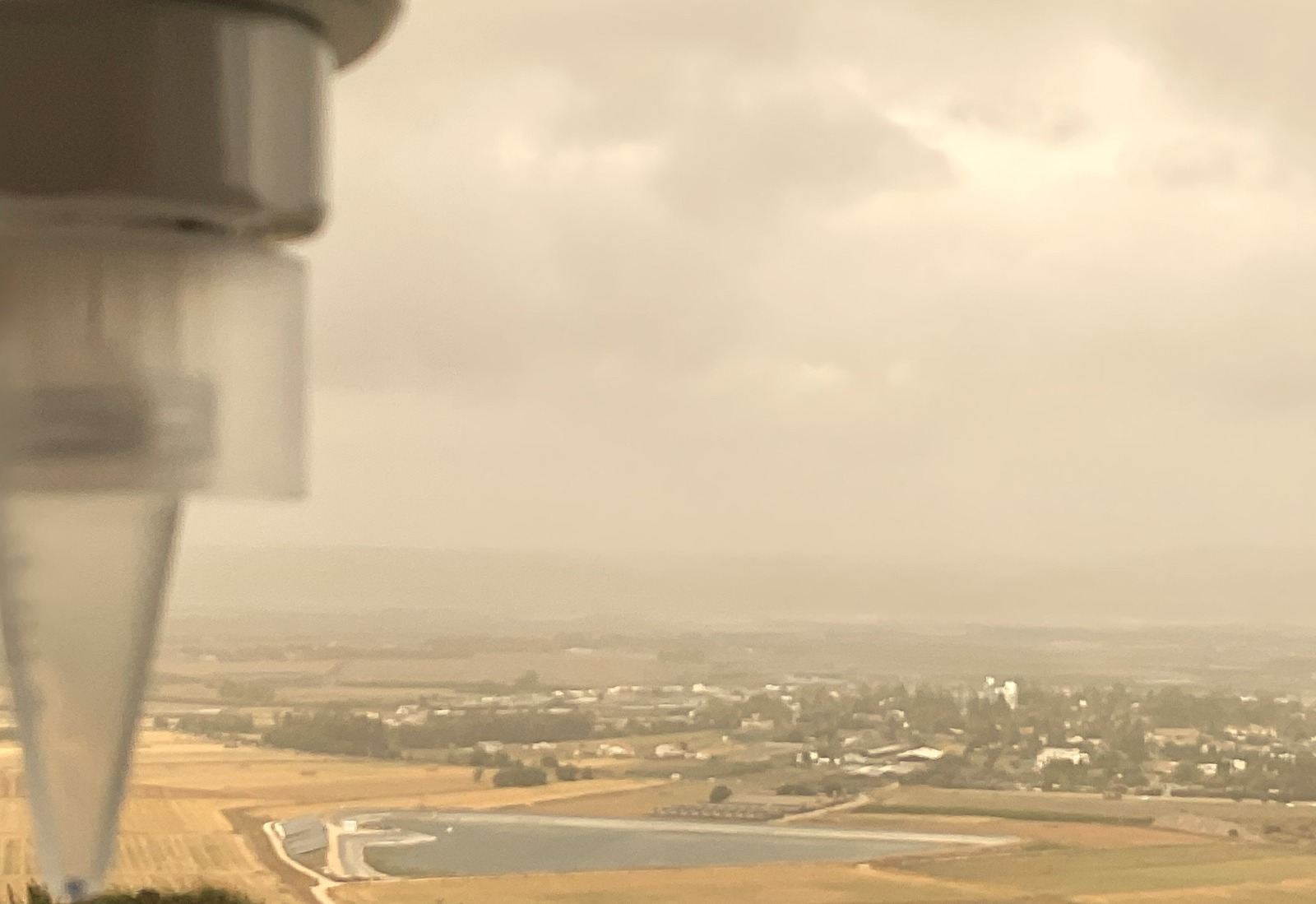
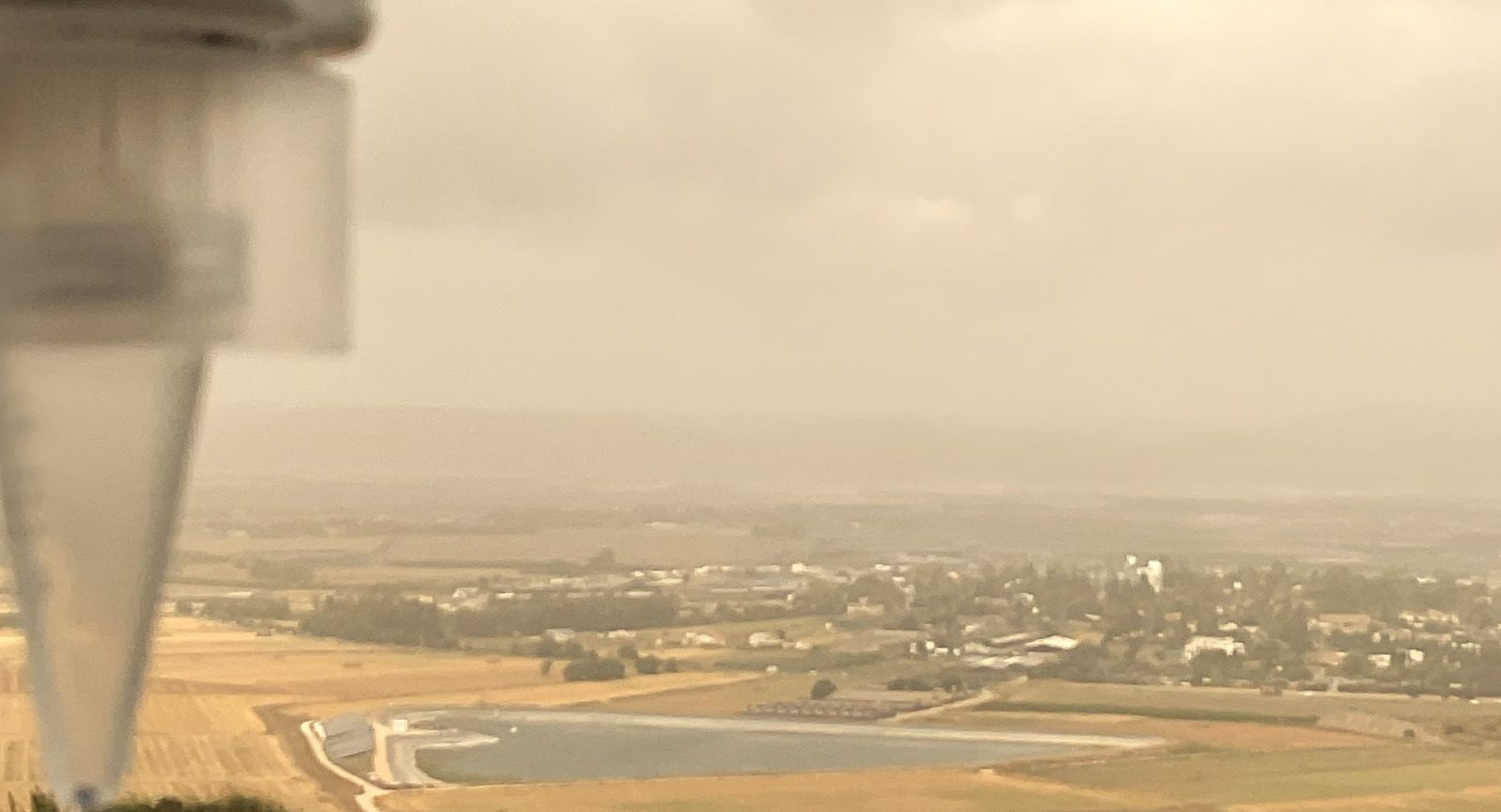
Dust events and sandstorms distribute particles over vast distances, and with them different types of microbes — bacteria, viruses and fungi. Survival is a challenge for these microorganisms under the extreme conditions of a dust plume, which may last for several days and up to weeks.
Our studies explore the properties that allow them to survive those conditions, and what the surviving communities do once they arrive.
02Scientific background
A travelling dust plume is a hostile environment: intense ultraviolet radiation, desiccation, oxidative stress, fluctuating temperature and very little available nutrient. The microorganisms recovered from dust are therefore not a random sample of the source soil, but a filtered subset — those able to endure transport, or to shelter within aggregates and biofilms attached to mineral particles.
Dust-borne microbial communities have been characterised in previous work, but the interactions between potentially active bacteria within transported communities have remained limited in scope.
03Research questions
- Which microorganisms survive long-distance dust transport, and which are metabolically active while airborne?
- What survival strategies — biofilm formation, association with mineral particles, stress resistance — make that survival possible?
- How do air trajectories and meteorological conditions shape the composition and activity of the community that arrives?
- What are the consequences for biogeochemical cycling, and what useful compounds might these dust-adapted organisms produce?
04Experimental approaches
Dust event air sampling
Collection of airborne particles during dust events, with parallel tracking of air-mass trajectories and meteorological conditions.
Amplicon sequencing of genes and transcripts
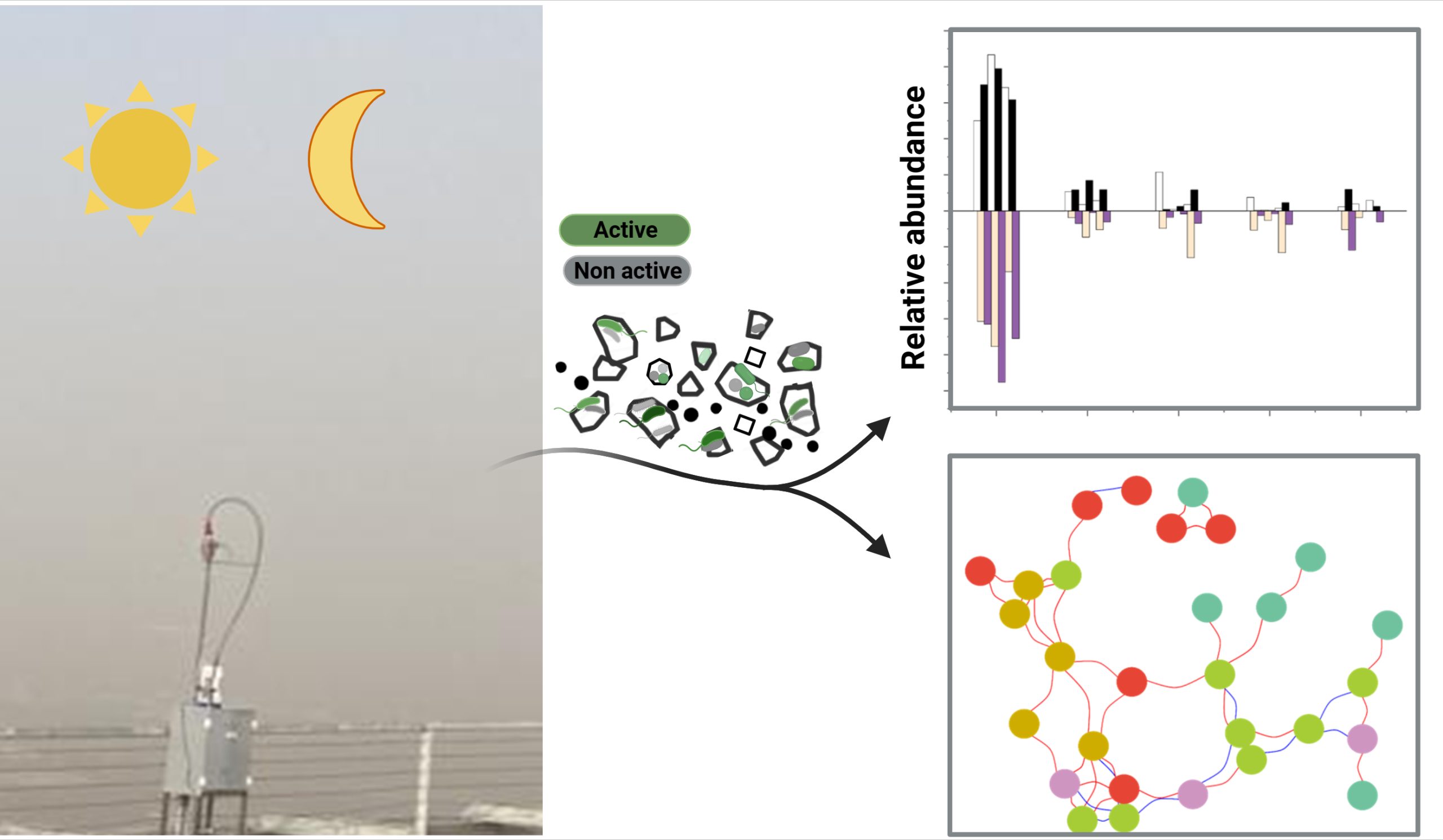
Sequencing of 16S rRNA genes alongside 16S rRNA transcripts, which distinguishes the organisms that are present from those that are potentially active.
Isolation and cultivation
Isolation of dust-associated strains — including Bacillus species — for characterisation under controlled laboratory conditions.
Imaging
Micro-computed tomography and microscopy of colonies and dust-associated structures.
05Findings and significance
Different air trajectories and wind speeds were associated not only with variation in the genomic microbial community composition, but also with specific 16S rRNA bacterial transcripts. Potentially active dust-borne bacteria exhibited positive interactions, including carbon and nitrogen cycling, biotransformation of heavy metals, degradation of organic compounds, biofilm formation, and the presence of pathogenic taxa.
Hu et al., Environmental Microbiology Reports, 2023 · read the paperOur 2025 study in Communications Earth & Environment examined how Bacillus biofilm formation and niche adaptation shape the microbial community of long-distance transported dust.
Lang-Yona et al., Communications Earth & Environment, 2025 · read the paperBy studying these dust-optimised bacteria we hope to better understand their survival strategies, including the production of previously unknown antibiotics, and the storage of atmospheric carbon dioxide by mineralization — a process that could in turn affect the global carbon cycle.
06From the field and the lab


07Related publications
08Collaborations and funding
Other research directions

Marine Bioaerosols & Aerial Connectivity
Microorganisms cross continuously between water and air. We follow them out of the ocean and inland waters, through the atmosphere, and back down again — and ask what that exchange does to the ecosystems at both ends.

Atmospheric Transport of Antibiotic Resistance
Antibiotic resistance genes travel through urban air on particles. We measure how they are distributed across particle sizes, what they travel with, and what that means for exposure.